


Lanivet
Cornwall Information & Accommodation Guide
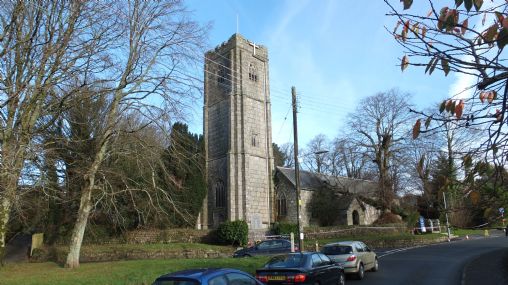
Lanivet, in Cornish, Lanneves, meaning lann - 'sacred enclosure' + Neves - 'pagan sacred place ' is a village and parish in Cornwall.
Supporting this interpretation of the name is the name of nearby Clann - Kylelan 1284 from Kelly lan - the church in the grove.
Lanivet is unusual in Cornwall in having a village green. The school and the parish church stand stand adjacent to the Green forming the heart of the parish. Most of the oldest houses in the parish are near the Village Green and Church.
Lanivet is the geographical centre of Cornwall. The parish had an unusual claim to fame in addition to its wide range of historical interest.
In 1938, bamboo shoots grown on an estate here were cut by local members of the Boy Scout movement to feed London Zoo's first pandas. The Lanivet Inn sign features a panda.
In August 1872, Thomas Hardy, the famous author who wrote 'Far from the Madding Crowd' and 'Tess of the D'Urbervilles' came to Lanivet. He visited the home of Emma Gifford where he was introduced to her parents at Kirland House. He also wrote a poem in the same year entitled 'Near Lanivet'.
Parish Church of Lanivet
The dedication of the parish church is unknown. Nicholas Roscarrock, circa 1600, believed that Nivet or Nevidh was a daughter of King Brychan. There is a Lannevet in northern Brittany. The earliest record of the parish name is Lannived in 1268. The church stands adjacent to the village green, an unusual feature in Cornwall. It is likely that the earliest religious building on the site would have been a Celtic monastery although this could have been situated at the hamlet of Lamorick.
There was a church on the site in Norman times. Todays church is mostly from the 15th century with a restoration having taken place in 1864/1865. During the restoration, fragments of a previous church were found built into the walls. A cross slab was found which can now be seen in the churchyard. A number of mediaeval frescoes were uncovered during the restoration work - one shows a crowned female figure holding a sceptre with barely legible text which some believe says St Crede - possibly Credis near Padstow. A record concerning the dedication of the high altar in 1338 church was found. There are the remains of a 5th or 6th C inscribed pillar stone in the church with fragmentary inscription "Annicu fil".
The church has a square three storey tower with a peal of six bells. It comprises a chancel, nave, and north and south aisles. The interior has six arches made of St Stephens's stone. There is a south porch and a priest's door. The church contains monuments to the Courtenays of Tremere, who were landowners in the parish during the 14th century. The parish records date back to the reign of Elizabeth. The first rector listed was in 1259. The church today is part of the Bodmin Team Ministry and has a daughter church in Nanstallon.
The northern part of the churchyard contains two ancient stone crosses. One is a wheel-headed cross.
Dating from the 10th or 11th century, a rare tombstone type can be seen in the churchyard - a hogback grave or coped stone with key pattern markings dating from the Celtic period.
Ancient Crosses and Stones in the Parish of Lanivet
There are a large number of crosses in Lanivet parish: Reperry Cross stands on the hedge beside the old pre-turnpike road from Bodmin to St Austell; there is a cross in a hedge at Fenton Pits; a Celtic cross at Tremore (Tremoor) crossroads; a 10th century Cornish cross at the entrance to Lesquite Lane - Lesquite Cross; with further crosses at Woodley, Laninval, St Benet's, Bodwannick, St Ingunger.
Local field names also suggest crosses once stood at Bokiddick, Penvivian, Tretoil, Tredenham, Tremeer.
Archaeological Sites
There was a garrisoned Roman fort at Tregear, near Nanstallon occupied for only about 25 years during the latter half of the 1st century A.D. Another fort or camp stood at Dunmere - Great Hill Fort and possibly a 3rd at St Ingunger (there are several fields on the farm named Gear or Gears - from Kaer or Ker - fort.
One of the oldest and best preserved ancient monuments in the west exists at the southern edge of the parish. This is the ancient Castilly Henge dating from the Neolithic period.
Other sites of an archaeological interest in the parish include a burial chamber north east of Lesquite - Lanivet Quoit, and the remains of a Bronze Age barrow near Nanstallon. Lamorrick is believed to have been the site of a Celtic monastery.
St Benet's
A short distance from the church are the remains of St Benet's Monastery which belonged to the Benedictine order. It is said by some to have been subordinate to Monte Cassino, in Italy, or by others, to Clairvaux in Burgundy. Originally, in 1411, it was founded as a lazar house, an old term meaning hospital, then during the 15th century a chapel with a tower and an adjacent longhouse were built. The building work was not complete by 1430. It is mentioned in a document of 1535. During 16th century, St Benet's owned the religious house of Credow or Credes near Padstow. After the Reformation it became the home of the Courtenay family. The present house appears to be 19th century with 15th century windows built into the facade.
Mining
Lanivet parish was once a prosperous mining area and contained eleven working copper mines. These included Lanivet Consols,Tretoil. Several mines near Lamorick.
Old tin mine up on the ridge. Lanivet Tin. Wheal Prosper. Tretoil, Lanivet (Iron), Prosper and Michell, Wheal Providence part of Cornwall United Mines, Lanivet, Mulberry (Mulberry Hill) - tin and West Down Mines.
Retire Common - extensive tin streaming and iron mining up to mid 19th century.
As recently as 1965 permission was granted for a geo-chemical survey and test drilling for gold to take place. Nothing seems to have been found at that time, but with the present interest in gold drilling, maybe Lanivet will again become as prosperous as it was with copper mining.
The Saints' Way
Lanivet stands on the 'Saints Way', along which the early Christian saints travelled from Ireland, via Padstow, Lanivet is at the halfway point of the trail.
Important route in Middle Ages as important as A30 is today.
Lanivet Methodist Chapel. Originally built by the Bible Christians, this Methodist chapel was built in the late 19th century.
In the early 6th century, the hamlet of St Ingunger, within the parish, is believed to have been the home of the hermit, Saint Congar of Congresbury, who had a Celtic Christian settlement here. Churches dedicated to him have also been found in Brittany. There are no remains of its holy well and chapel. There is a Tregonger in St Clether parish.
Place names in the Parish of Lanivet: hamlets of Bodwanick, Bokiddick, Lamorick/Lamorrick, St Ingunger, Trebell, Tregullon, Tremore, and Woodly/Woodley, Higher Woodley. Part of St Lawrence is also in this parish. Reperry, Tremore Bridge, Tremore Manor - 18th century house. Miscellanea - hand guide stone.
The nearest cash machine is at SPSO on Truro Road in Lanivet.
All ATMs throughout Cornwall.
If the information on this website has been useful to you please consider a donation.
This easy to use travel planner makes it simple. Just add the location in Cornwall from where you are travelling and the destination you wish to travel to and it will provide full details of times, buses, trains and ferries to get you to your destination.
Location:
The village is situated approximately 2.5 miles/4km southwest of Bodmin.
Books online:
Click here to buy books online about Lanivet
Find all the Dog Friendly beaches in Cornwall
Places of interest in or around LanivetTowns, villages and other locations |
Cornish phrases and place names |
Topical phrases of the month October: 'Festival Phrases'
Place Name of the Month October: Karrekreun – Cargreen

|
Lanivet Map |
|
Lanivet Events |
|
Lanivet Community Information |
|
Lanivet Books |
|
Lanivet Photos |
|
Lanivet Videos |
|
Lanivet History |

Lanivet
Accommodation

in or around Lanivet


|
|

